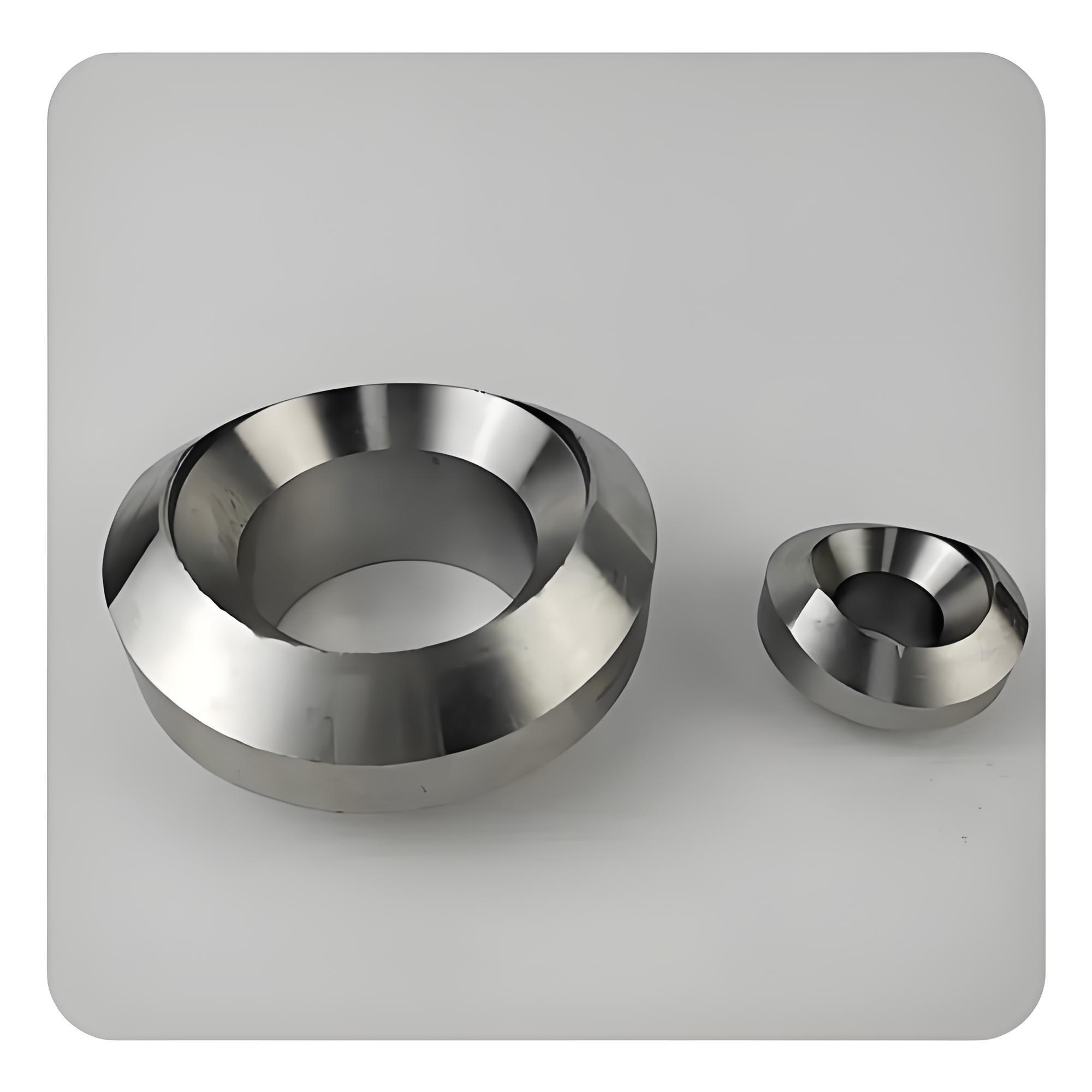
TOL Threaded Branch Outlet
TOL threaded branch outlet (Threadolet) is formed by integral die forging, with the saddle-shaped curved surface at the bottom welded and fixed to the outer wall of the main pipe, and the upper end has built-in NPT or BSPT tapered pipe threads, so branch pipes and instrument valves can be directly connected by threads without the need for secondary welding on site. Pressure ratings cover 3000LB and 6000LB, main pipe sizes range from NPS2 to NPS48, and branch pipe sizes range from NPS1/8 to NPS4. Materials include carbon steel A105, low-temperature steel LF2, stainless steel 304/316L, alloy steel F11/F22, and duplex steel. It is mainly used for leading out small-diameter functional points such as pressure gauge connections, drain and vent, and online sampling on high-pressure pipelines, and is suitable for pipe rack environments where instruments need to be frequently disassembled and reassembled and space is compact.
Learn More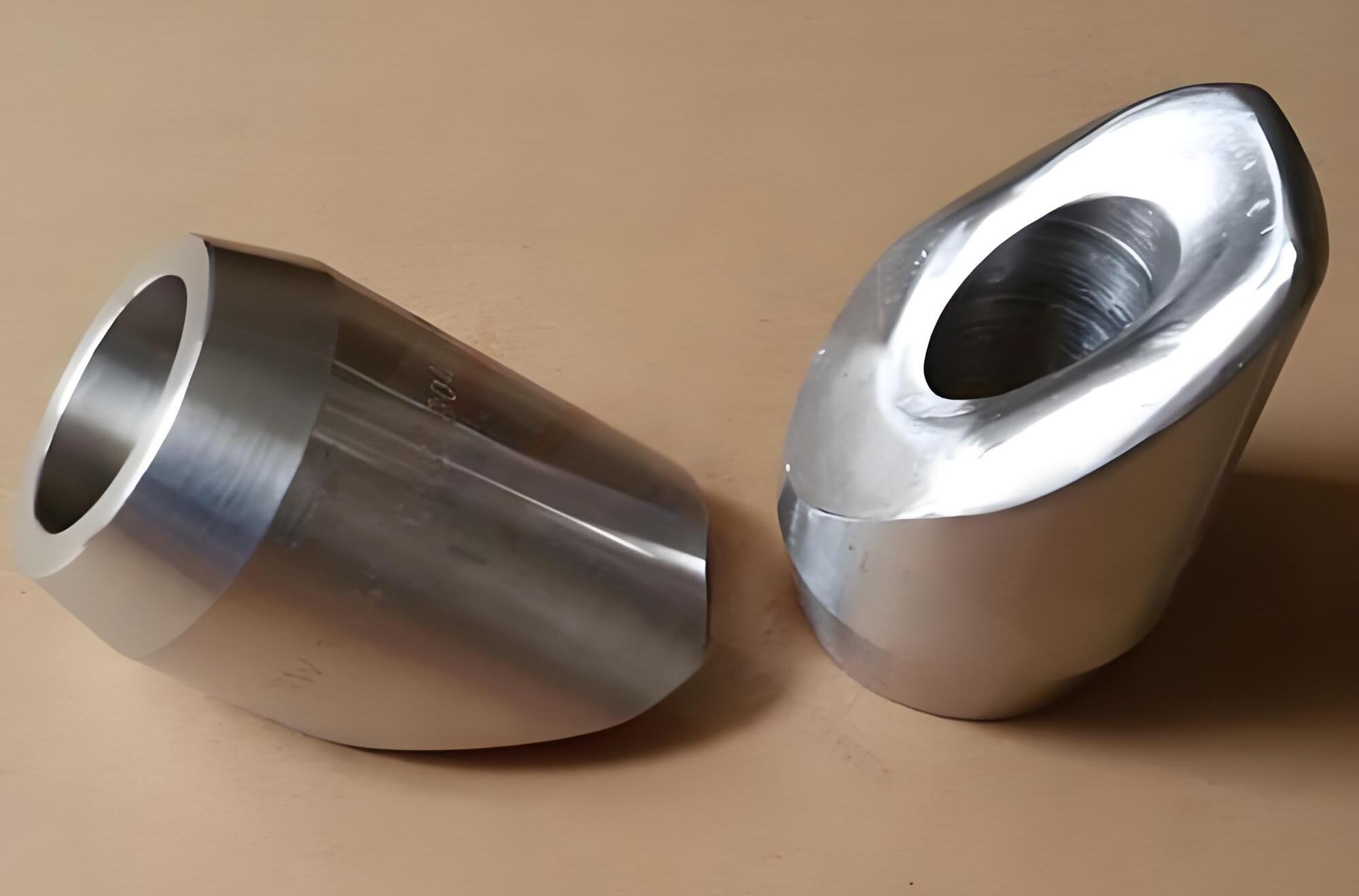
45° mitered branch outlet
The 45° lateral branch outlet we supply belongs to the MSS SP-97 standard integrally forged saddle-type pipe fitting. The branch is led out from the main pipe at a 45° oblique angle, and the bottom arc surface fits and is welded to the outer wall of the main pipe, with equal-area reinforcement built in. The branch end can be made with butt welding, socket welding, or threaded connection, and is used to replace practices such as 45° lateral tees and on-site oblique drilling plus reinforcement plates. The applicable standards cover MSS SP-97, ASME B16.9, ASME B16.11, and GB/T19326. The pressure ratings include 3000LB and 6000LB, the main pipe is NPS2-NPS48, the branch is NPS1/8-NPS4, and the materials include carbon steel A105, LF2 low-temperature steel, 304/316L stainless steel, F11/F22 alloy steel, duplex steel, and nickel-based alloy. It is commonly used for oblique bypasses of high-pressure pipelines, buffer branches, inclined instrument sampling points, and pipe racks where space is limited and oblique avoidance is required.
Learn More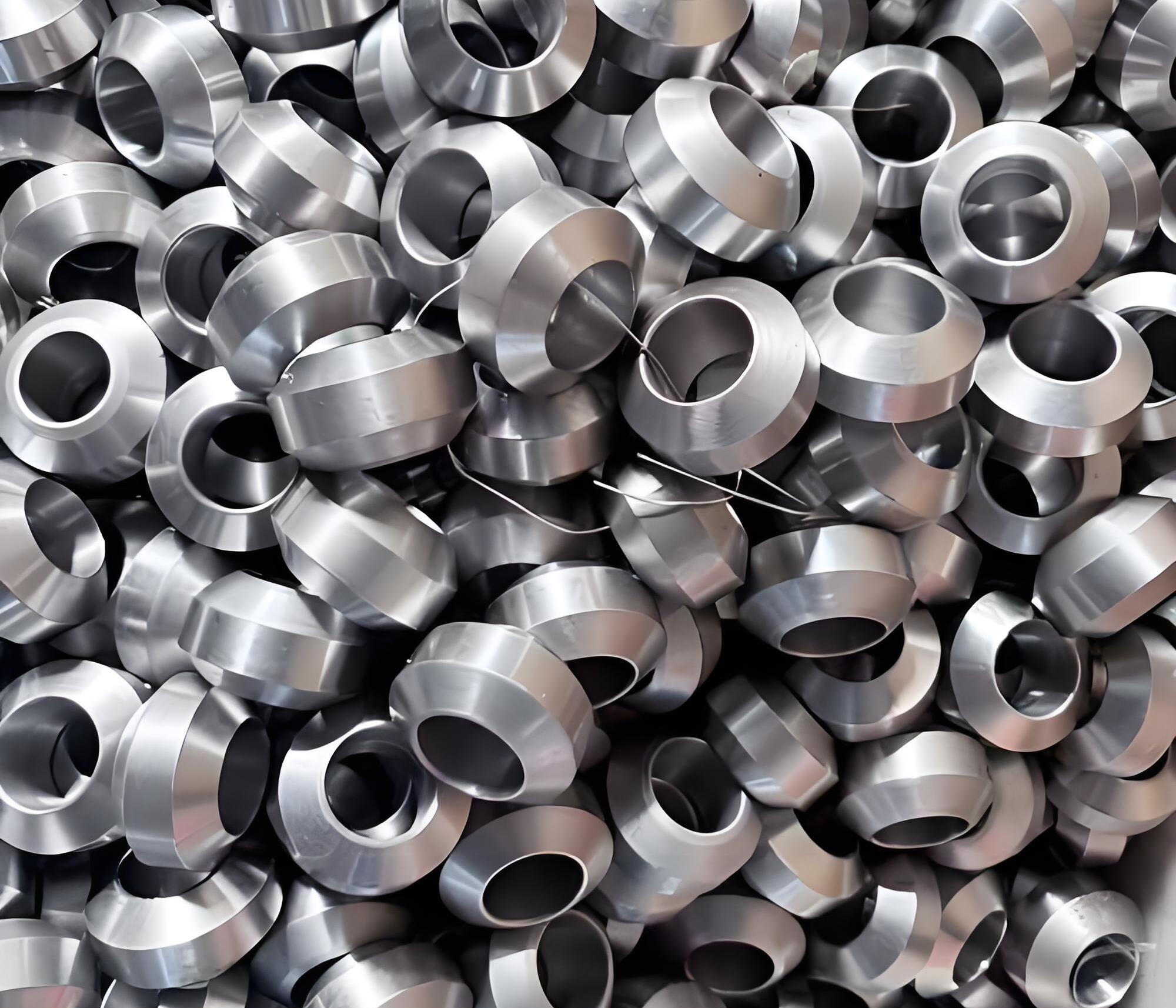
Short pipe branch outlet
The short-pipe branch outlet belongs to the MSS SP-97 integrally forged extended type branch outlet fitting with self-contained equal-area reinforcement. Unlike conventional 90° short-type WOL/SOL/TOL branch outlets, its body extends upward into an extended straight pipe, forming an integrated forged short-pipe branch structure; the bottom saddle surface is fixed to the outer wall of the main pipe by fillet welding, and the branch end extends outward for a certain length, so no additional short nipple needs to be welded on site, completing the outlet point in one step and reducing one field butt weld. It complies with MSS SP-97, ASME B16.11, and GB/T19326, with main pipe NPS2-NPS48, branch NPS1/8-NPS4, pressure ratings 3000LB and 6000LB, standard extension length 89-165mm, and custom pipe lengths are also available. The end is available in three forms: butt-weld bevel, socket bore, and external thread. Materials include carbon steel A105, LF2 low-temperature steel, 304/316L stainless steel, F11/F22 chrome-molybdenum alloy steel, 2205 duplex steel, and nickel-based alloy. It is mostly used for venting, draining, condensate draining, valve manifold outlets, and remote instrument points in petrochemical, thermal power, coal chemical, and oil and gas high-pressure pipelines, and is suitable for high-pressure working conditions requiring pipe connections outside insulation layers and reserved maintenance lengths.
Learn More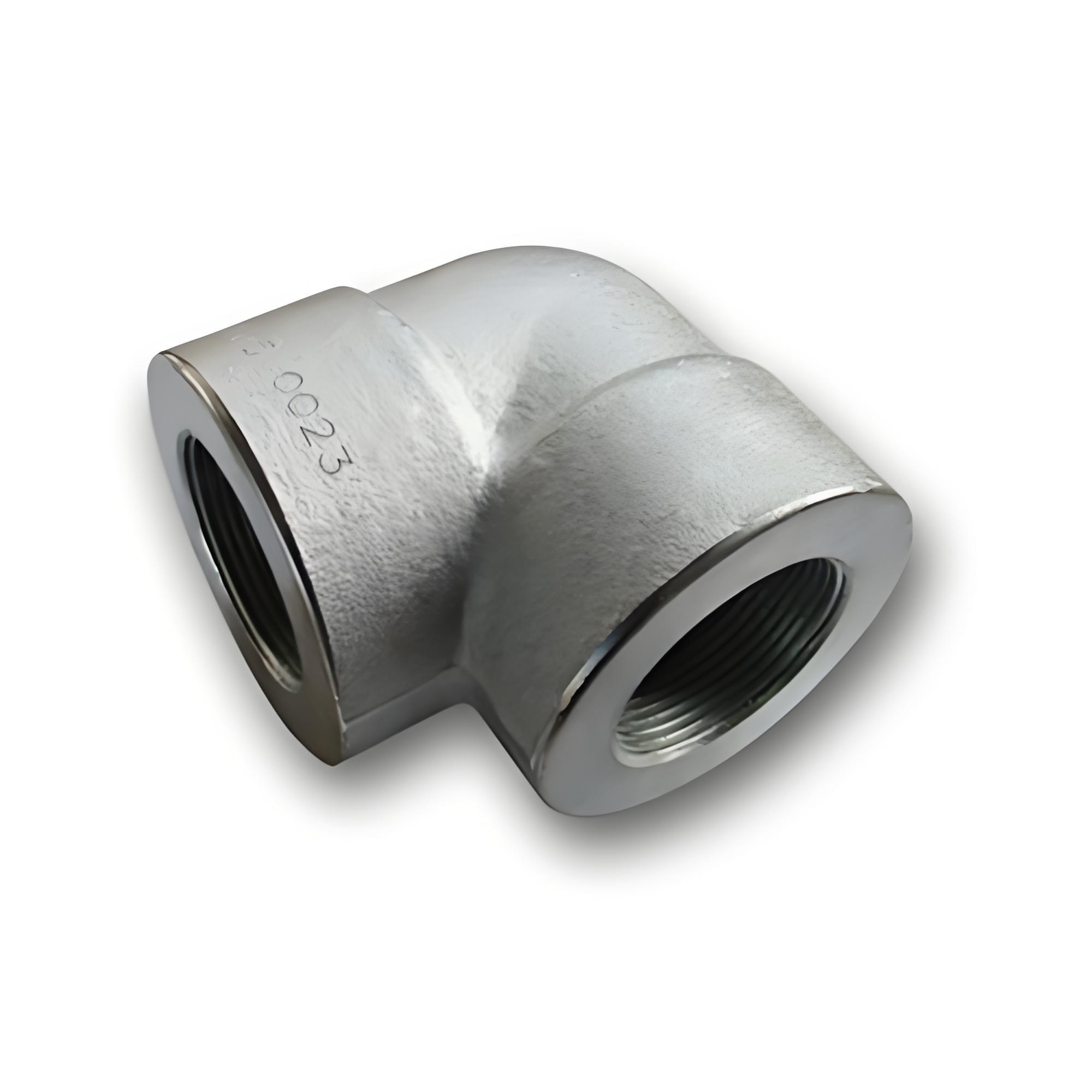
Elbow Branch Outlet
The elbow branch outlet we supply is integrally die-forged and formed in one piece, with the base curved surface precisely machined according to the outer arc of the elbow, so that after welding it can form an equal-area reinforcement structure with the parent elbow. Unlike conventional straight-pipe branch outlets, it specifically solves the problems that straight-pipe branch outlets cannot be installed at elbow locations and that on-site opening reinforcement is non-compliant. The product complies with MSS SP-97, ASME B16.9, ASME B16.11, and GB/T19326 standards, is suitable for run pipes from NPS2 to NPS48 and branch pipes from NPS1/8 to NPS4, and its pressure ratings cover 3000LB and 6000LB. The branch end offers three types of connections: butt welding, socket welding, and threaded, and the materials include carbon steel A105, LF2 low-temperature steel, 304/316L stainless steel, F11/F22 alloy steel, 2205 duplex steel, and nickel-based alloys. It is commonly used at points such as pressure and temperature measurement on high-pressure process elbows in petrochemicals, blowdown and venting on steam elbows in thermal power, sampling on bent pipes in coal chemical industry, and pressure relief on thick-wall elbows in natural gas.
Learn More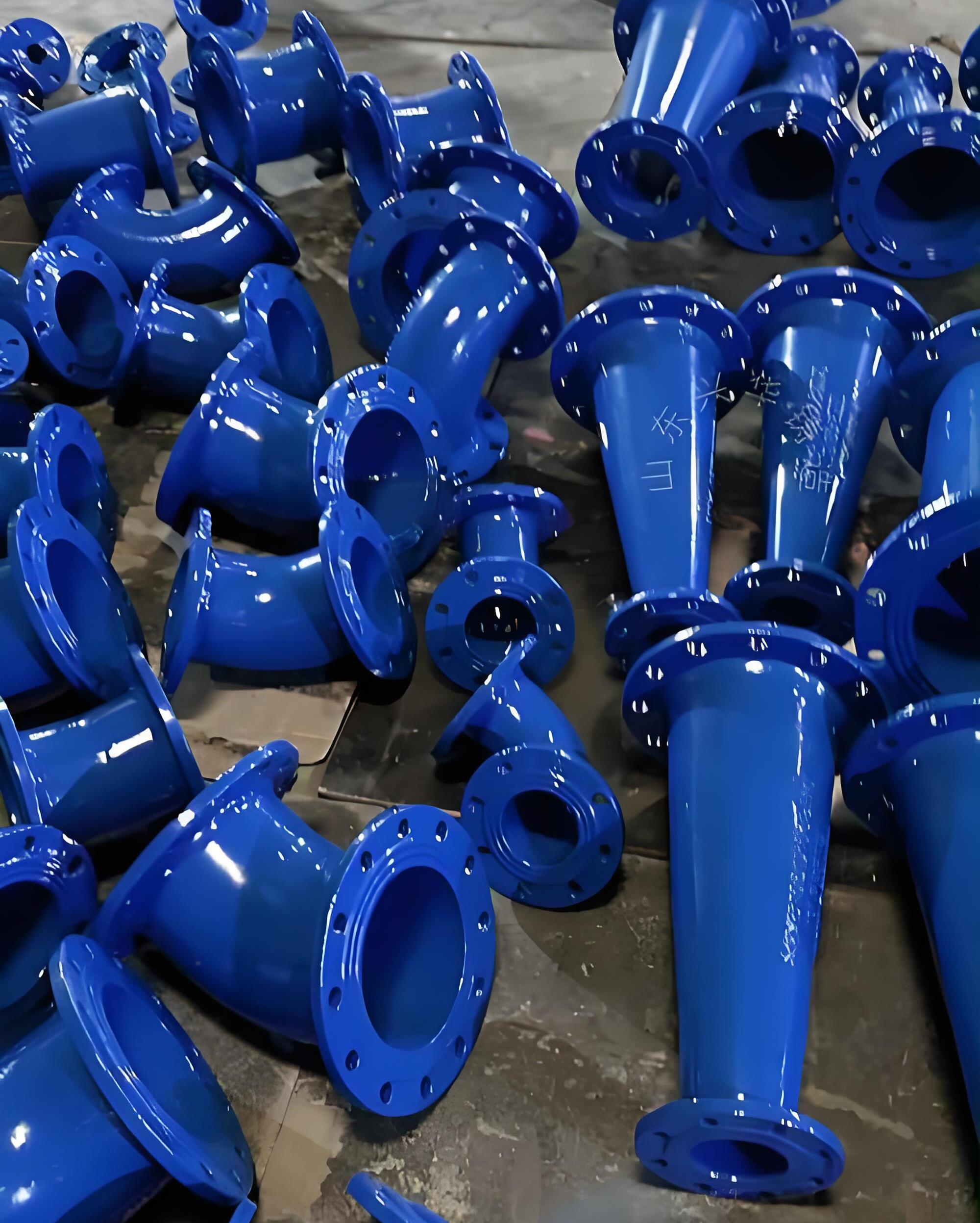
gradually expanding streamlined branch outlet
The gradually expanding streamlined branch outlet belongs to the MSS SP-97 integrally forged, smoothly gradually expanding streamlined flow passage type equal-area reinforced branch outlet seat. Unlike the conventional right-angle transition Weldolet butt-welding branch outlet, its interior adopts a circular-arc gradually expanding smooth transition structure, with no right-angle corner from the main pipe to the branch pipe, which can weaken eddy currents, pressure drop, erosion wear, and cavitation. The saddle surface of the base fits against the outer wall of the straight pipe and is fixed by fillet welding, integrally forged and formed with built-in reinforcement, and can replace on-site hole opening, ordinary branch outlets, and reducing tees. The main pipe covers NPS2 to NPS48, the branch pipe covers NPS1/8 to NPS4, the pressure ratings are 3000LB and 6000LB, and the branch pipe end provides three types of connections: butt welding, socket welding, and threaded. Materials cover carbon steel A105, LF2 low-temperature steel, 304/316L stainless steel, F11/F22 alloy steel, 2205 duplex steel, and nickel-based alloys.
Learn More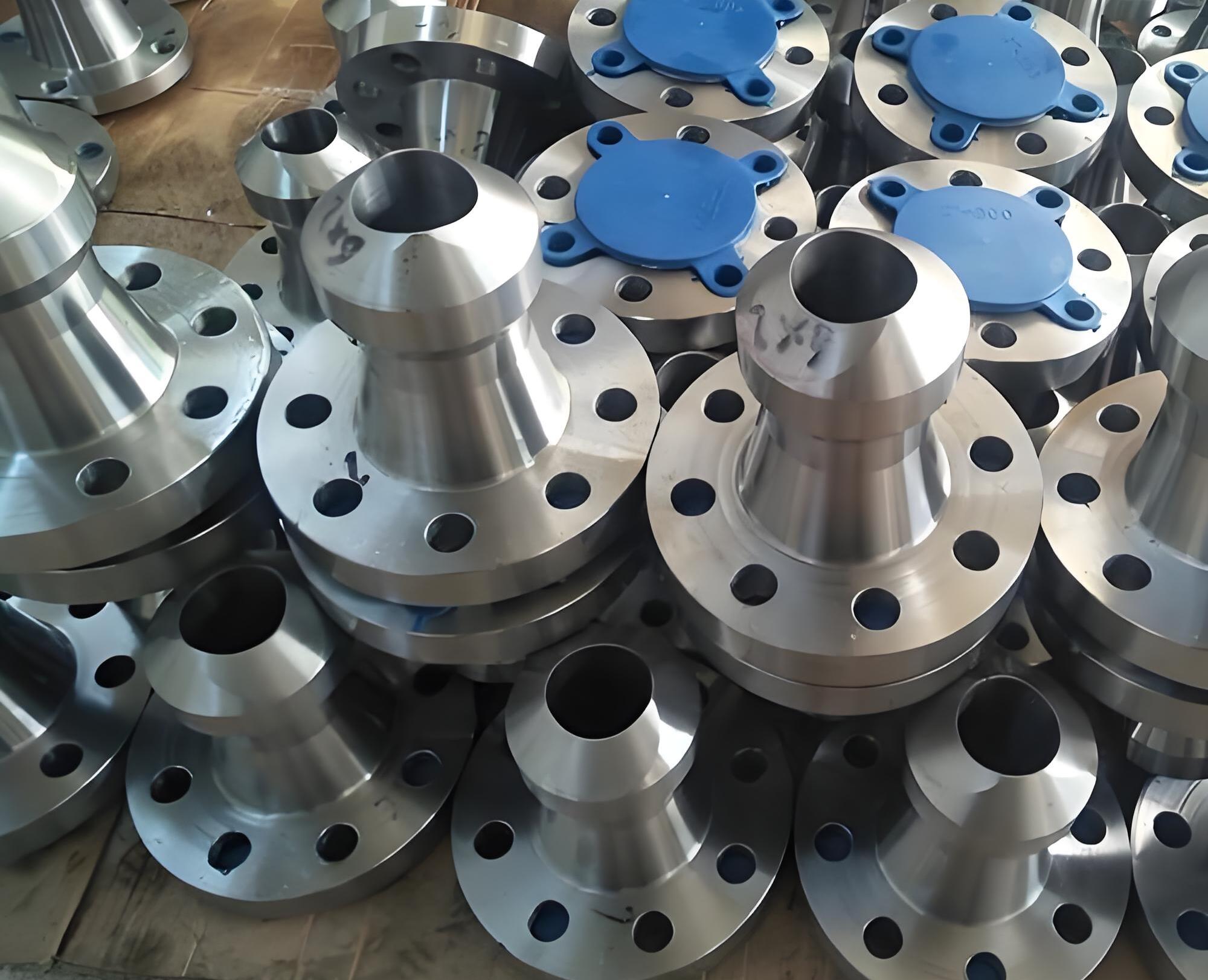
Flanged branch outlet
The flanged branch outlet belongs to the MSS SP-97 integrally forged one-piece flanged reinforced branch outlet fitting; the branch end is directly forged with a standard flange face, and the saddle base fits against the outer wall of the main pipe for welding, with integral forming and inherent equal-area reinforcement. Compared with the traditional multiple-step process of welding a branch outlet on an opening, welding a short piece, and then welding a flange, this structure combines three pieces into a single forged piece, and on site only one weld seam with the main pipe needs to be completed, reducing the hidden leakage risk caused by multiple layers of weld seams. The flange face is manufactured to ASME B16.5, with the domestic equivalent being GB/T19326, and the body design follows MSS SP-97. The main pipe covers NPS2 to NPS48, the branch covers NPS1 to NPS12, the flange pressure rating ranges from Class150 to 2500#, and the sealing face options include RF raised face, RTJ ring joint face, and FF full flat face. Materials include carbon steel A105, LF2 low-temperature steel, 304/316L stainless steel, F11/F22 chrome-molybdenum alloy steel, 2205 duplex steel, and nickel-based alloys. It is suitable for valve groups, instruments, filters, and bypass interfaces that require flanged detachable connection, and is especially suitable for branch points that require frequent disassembly for maintenance and isolation and shutoff.
Learn More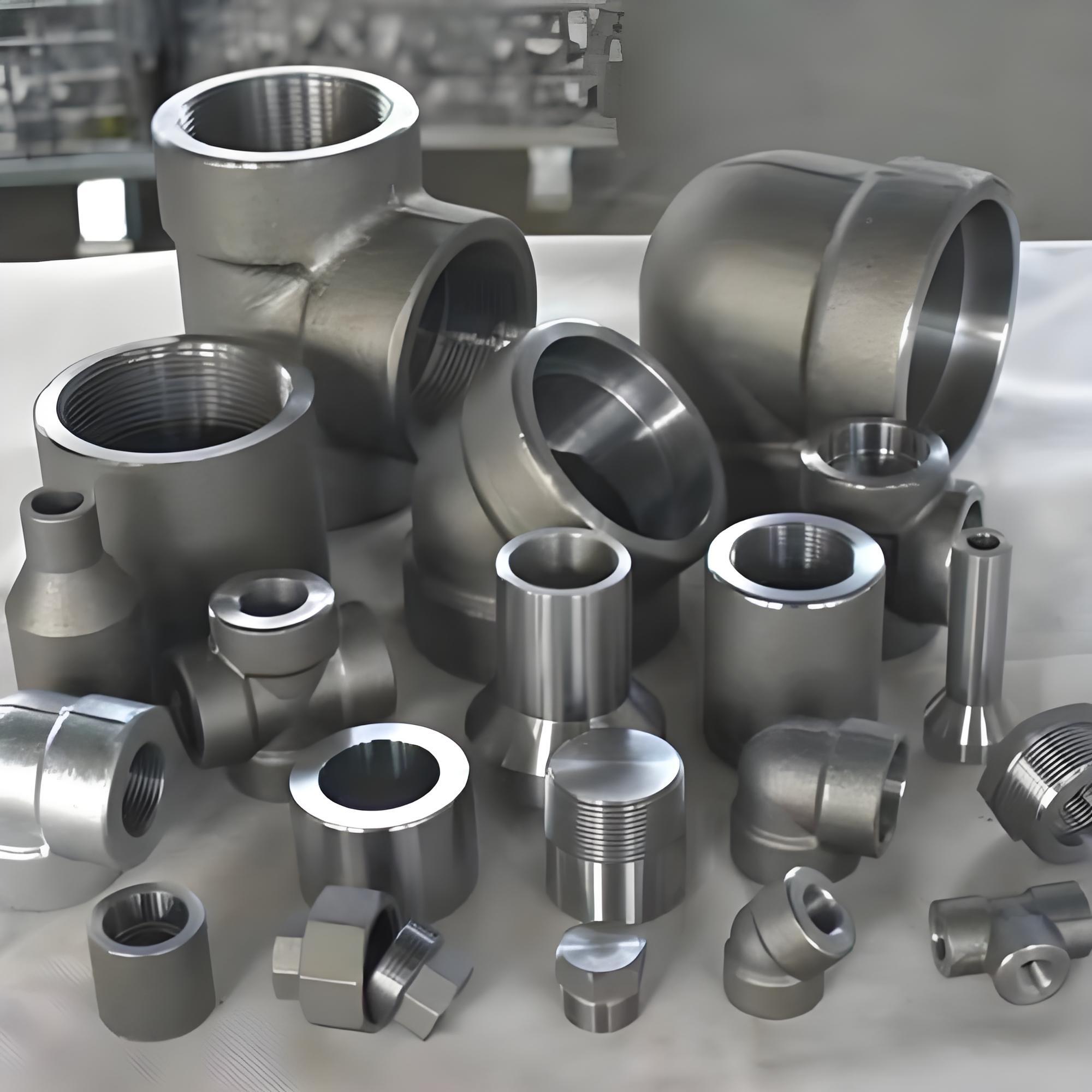
Union branch outlet
The union branch outlet is formed by integral hot forging, with the saddle base fitting the outer wall of the main pipe for welding, and the branch end comes with an MSS SP-83 standard high-pressure union, allowing quick unscrewing for maintenance, isolation of instruments and valves, without the need to cut the pipeline or dismantle welds. The body reinforcement follows MSS SP-97, the union seal and threads comply with ASME B16.11 and MSS SP-83, with domestic equivalents GB/T19326 and GB/T14383. Main pipe NPS2-NPS48, branch NPS1/8-NPS2, pressure ratings 3000LB and 6000LB, sealing available in two types: spherical hard seal and gasket soft seal. Materials cover carbon steel A105, LF2 low-temperature steel, 304/316L stainless steel, F11/F22 chrome-molybdenum alloy steel, 2205 duplex steel, and nickel-based alloys. Suitable for high-pressure instrument branch projects with dense instruments, high-frequency disassembly and assembly, prohibition of hot work, and requirements to reduce weld leakage points.
Learn More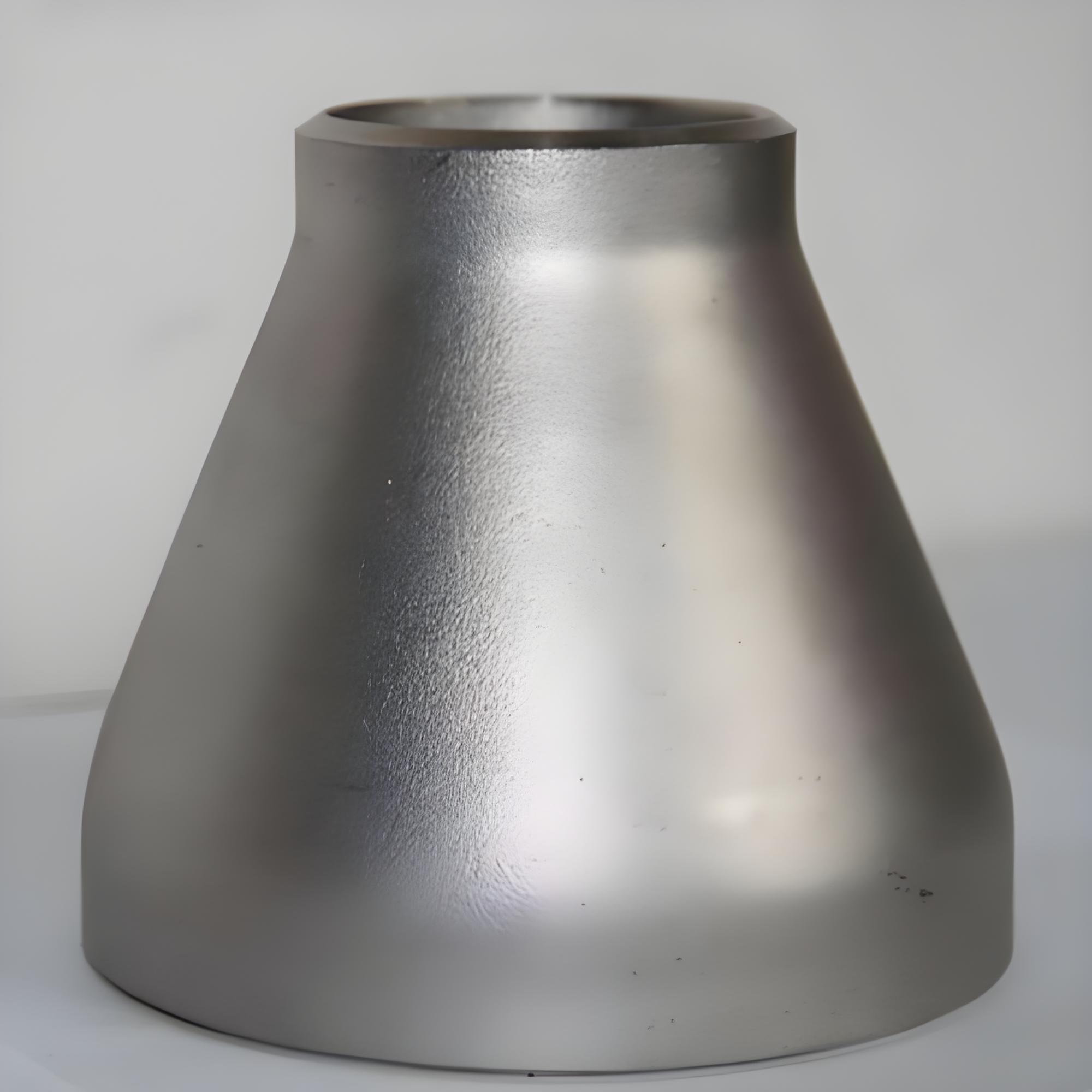
Reducer
A reducer is a conical pipe fitting that changes the flow cross-section in a piping system. Its main function is to regulate the medium flow velocity and pipeline pressure drop, reducing turbulence and eddy current impact. We provide two structures: concentric and eccentric. Concentric reducers are mostly used for vertical pipelines, instrument piping, and steam lines, while eccentric reducers are mostly used for horizontal pipelines and pump inlet lines. Products can be manufactured according to standards such as the national standard GB/T12459, GB/T13401, the American standard ASME B16.9, as well as petrochemical SH, chemical HG, Japanese JIS, German DIN, and others, and support seamless stamping, rolled welding, and forged forming. Conventional specifications are sufficiently stocked, support a minimum order of 1 piece, and can also be customized according to drawings or samples for non-standard diameters, special wall thicknesses, and anti-corrosion treatment.
Learn More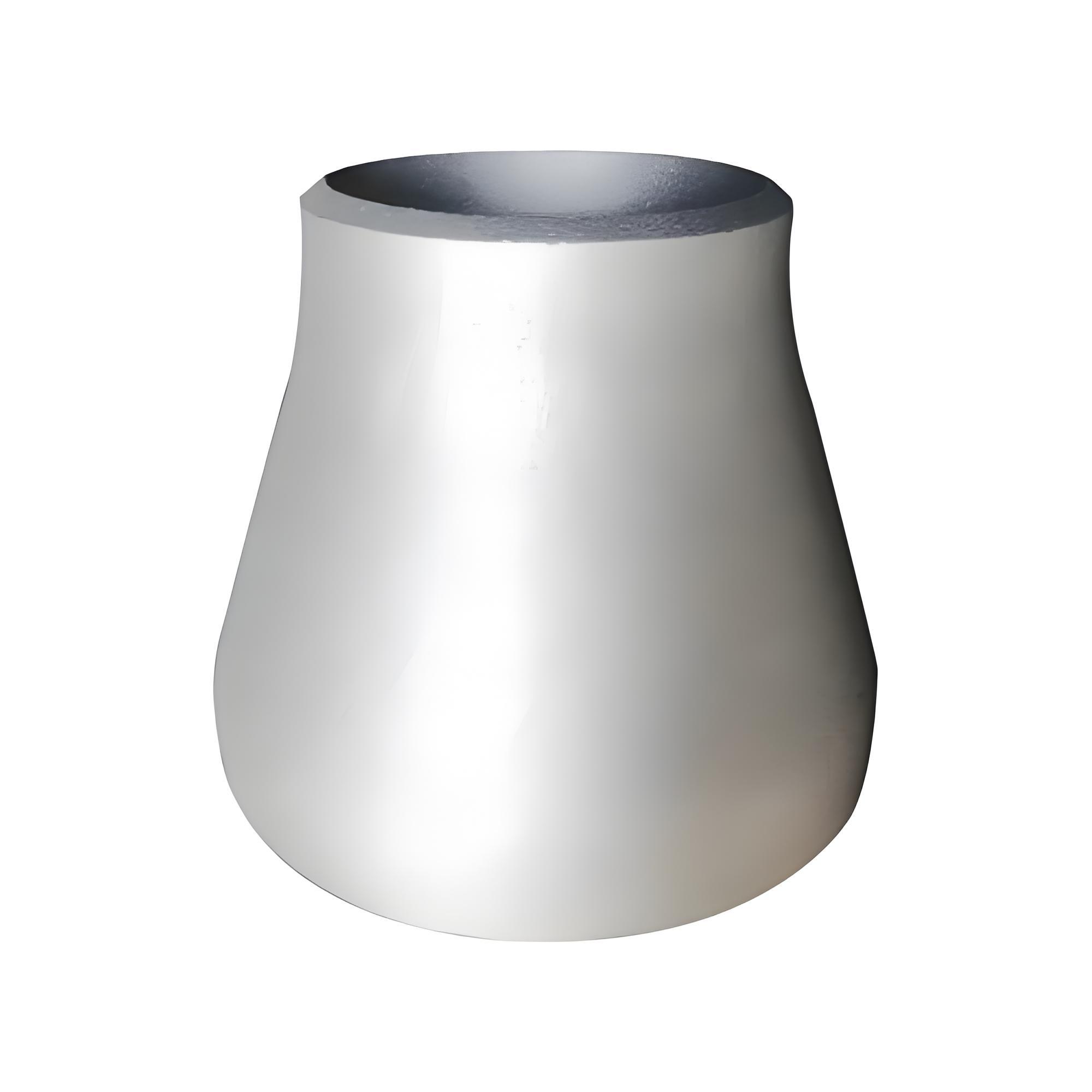
Concentric reducer
Concentric reducers are used for centered and smooth connection of two sections of pipelines with different diameters. By means of a symmetrical conical structure, they change the pipeline flow cross-section to achieve a smooth transition of pipe diameter. The product is centered and symmetrical, with smooth flow channels and uniform resistance. It will not produce biased flow, liquid accumulation, gas accumulation, or vortex impact, and can adjust the medium flow rate, balance pipeline pressure, and reduce fluid noise and pipeline losses. We can provide common materials such as carbon steel, stainless steel, and alloy steel, with processes covering seamless hot pressing, welded rolling, and forged forming. Concentric reducers are suitable for vertical risers, gas pipelines, steam pipelines, instrument pressure tapping pipelines, and reducing positions at equipment inlets and outlets, and can solve problems such as pipeline instability, large pressure fluctuations, and low transportation efficiency caused by sudden pipe diameter changes. Regular stock specifications support a minimum order of 1 piece, and non-standard sizes can be customized according to drawings or samples.
Learn More