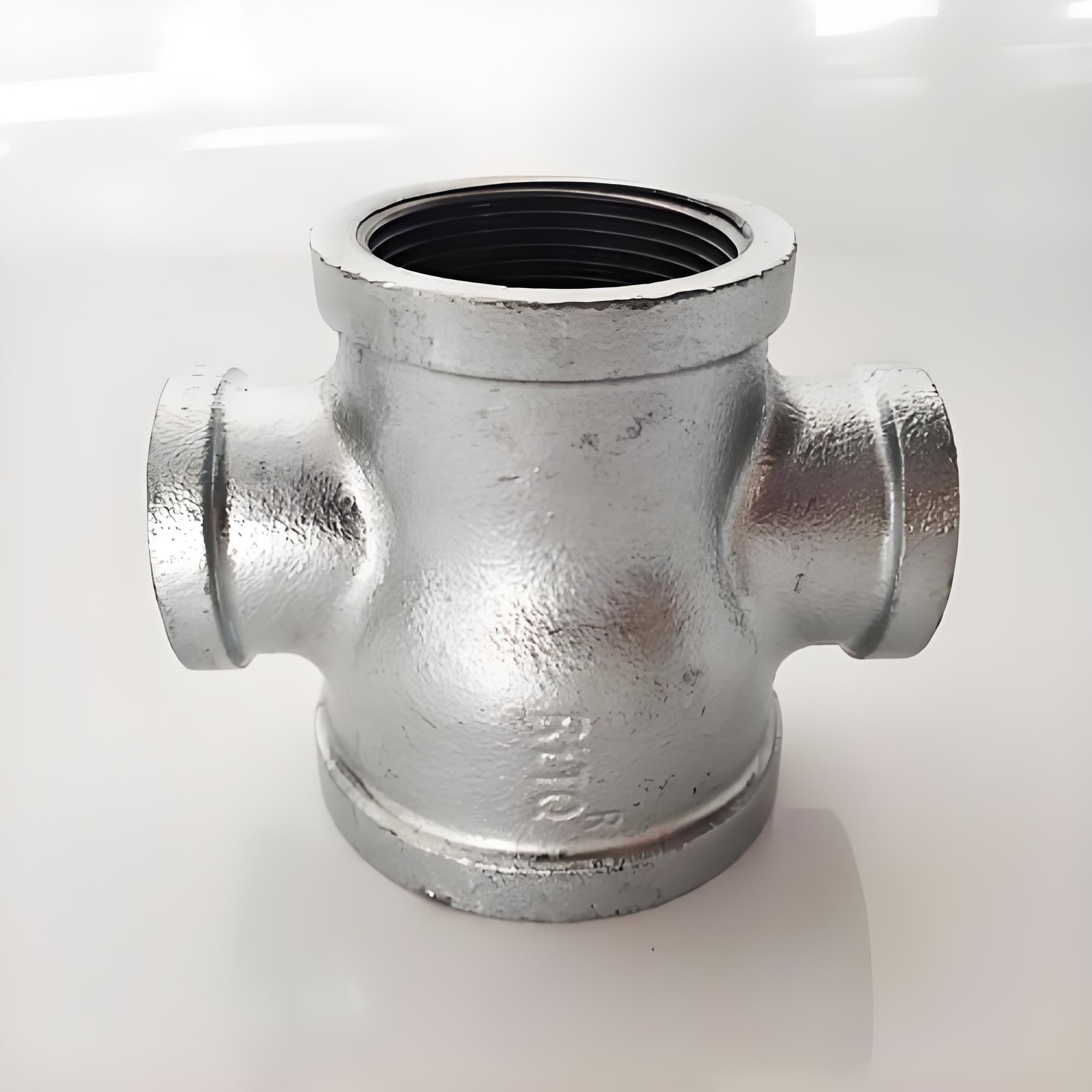
Reducing Cross
A reducing cross is a cross-shaped pipe fitting in which at least two of the four pipe ends have unequal nominal diameters. It is used to simultaneously achieve multi-branch distribution and pipe diameter transition within a piping system, without the need to install additional reducers, thereby streamlining pipeline layout and reducing welds and leakage risks. The product complies with standards such as ASME B16.9, GB/T12459, and SH/T3408. The diameter range is DN15 to DN1200, and wall thickness grades range from SCH10 to SCH160 as well as XXS extra heavy. Forming processes include hot pushing, hydraulic bulging, forged machining, and welded plate fabrication, ensuring uniform and dense pipe walls, suitable for high-pressure, high-temperature, and complex fluid service conditions. Reducing crosses are widely used in petrochemical, oil and gas, power plant, coal chemical, water treatment, and other fields, and are especially suitable for process pipe sections in plant areas where multiple branch pipes of different specifications are simultaneously branched off. We provide various materials such as carbon steel and stainless steel, and support customization of structures including two-way, three-way, and eccentric reducing configurations to meet different engineering requirements.
Learn More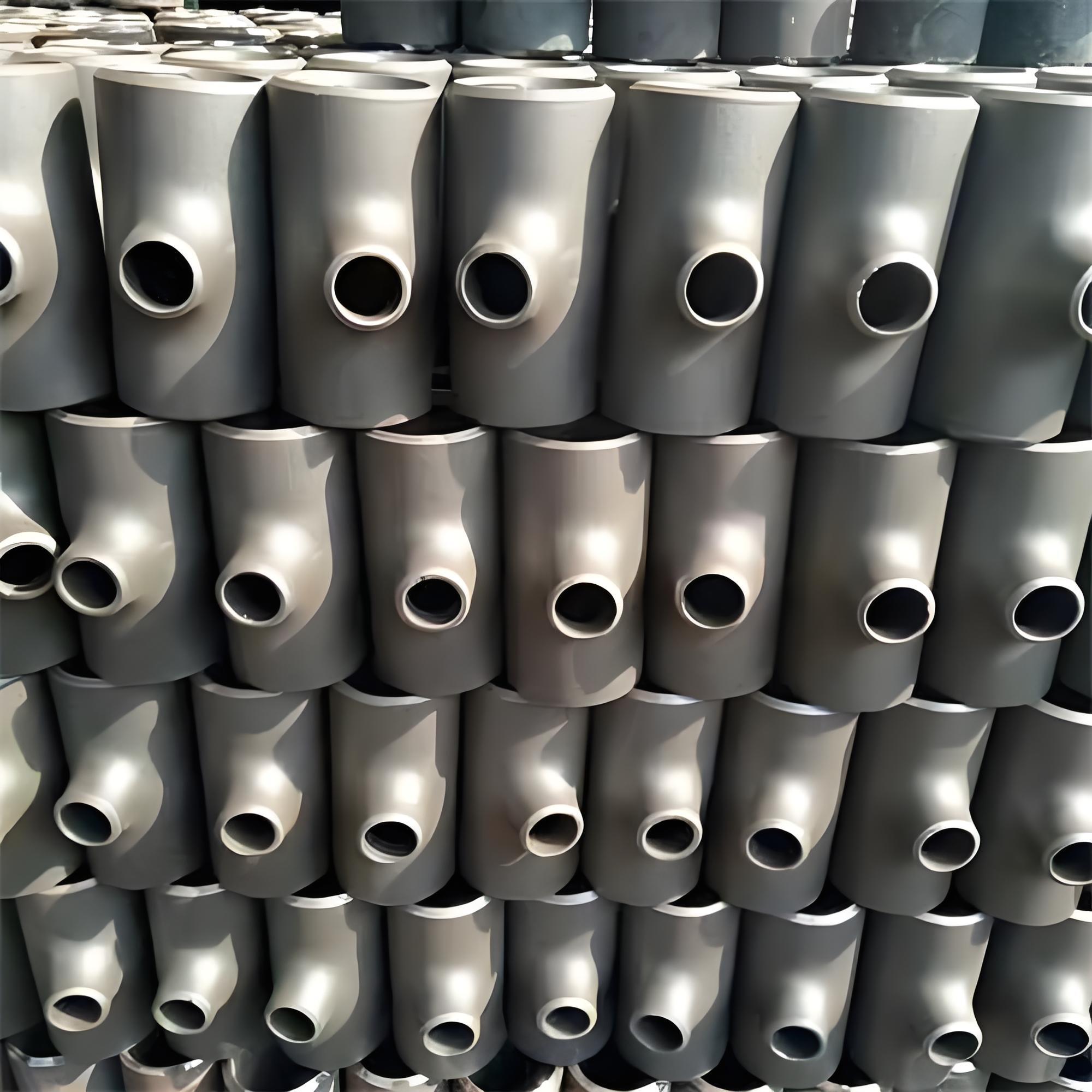
Eccentric Reducing Cross
The eccentric reducing cross is a custom reducing cross under the Guojie brand. Its reducing port adopts an eccentric non-concentric transition, keeping one side of the pipe wall flush (top-flat or bottom-flat), and is specially designed for horizontal process pipelines. Compared with ordinary concentric crosses, the eccentric structure can avoid the formation of gas pockets and liquid pockets at the reducing position of horizontal pipelines, effectively solving the hidden dangers of gas accumulation, liquid accumulation, medium sedimentation and retention, and cavitation. The product implements the ASME B16.9, GB/T12459, GB/T13401, and SH/T3408 standards, with a nominal diameter range of DN15-DN1200 and wall thickness grades SCH10-SCH160 and XXS extra-heavy. This product can simultaneously achieve four-way medium splitting, merging, and pipe diameter transition without the need for additional reducing pipe fittings, simplifying the pipeline structure and reducing weld leakage points. It is widely used in horizontal pipeline networks for oil products, chemical fluids, steam, sewage, etc., and is especially suitable for working conditions requiring continuous venting (top-flat) or thorough condensate drainage (bottom-flat). Non-standard customization is supported to meet different engineering needs.
Learn More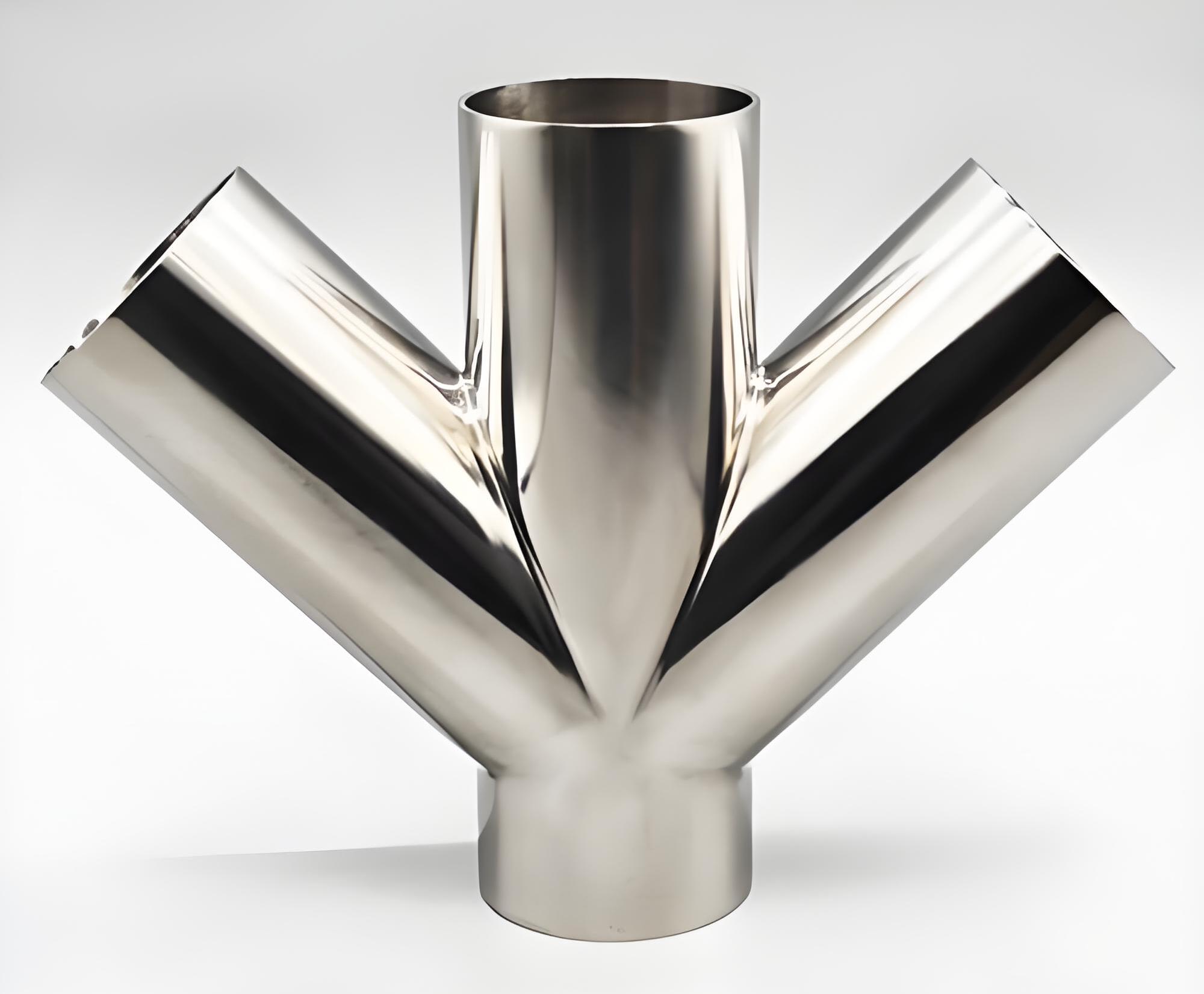
Diagonal Cross
A 45° lateral four-way (45° diagonal four-way) is a four-way pipe fitting in which two branch pipes branch off from the main pipe at a 45° diagonal included angle. Unlike conventional four-ways that intersect perpendicularly at 90°, the mainstream type is a symmetrical double-45° lateral branch structure. It is divided into two major categories: equal-diameter lateral four-ways and reducing lateral four-ways. Butt-welded steel industrial types are the mainstay, and there are also socket-welded, threaded, and grooved water supply and drainage types. The applicable standards are ASME B16.9, GB/T12459, GB/T13401, and SH/T3408. Nominal diameters range from DN15 to DN1200, and wall thicknesses range from SCH10 to SCH160 and XXS heavy-gauge. The 45° inclined transition can greatly reduce fluid impact, eddy currents, and erosion wear, resulting in lower pressure drop and making it less prone to slag accumulation and sedimentation, making it very suitable for drainage, slurry, and erosion-prone process pipelines. The forming processes include hot-pressing push forming, hydraulic bulging, forging and machining, and large-plate welding. It is mostly used in municipal drainage, chemical slurry, HVAC circulation, and flexible routing in plant areas, and is a specialized four-way pipe fitting of the noise-reducing and wear-reducing type.
Learn More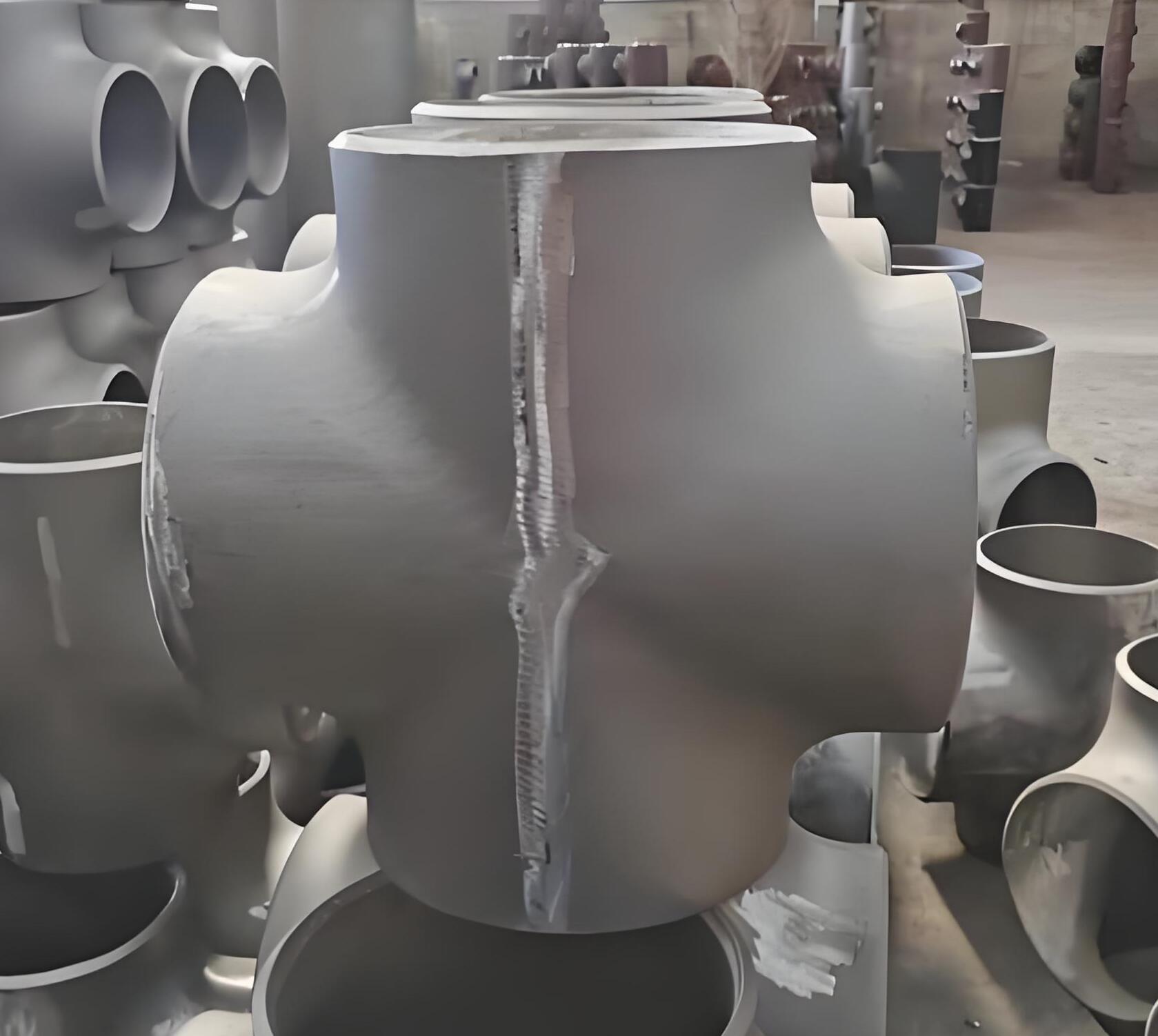
BW Butt Weld Cross
BW butt-welded cross, namely beveled butt-welded steel cross, is a key pipe fitting used for four-way medium splitting or merging in industrial piping systems. Its ports are prefabricated into standard welding bevels, and after butt-jointing with pipes, full-penetration welding is performed, making the weld strength close to that of the pipe body and forming a rigid connection with high strength and low leakage. The products mainly comply with standards such as ASME B16.9, GB/T12459, GB/T13401, SH/T3408, etc., covering a nominal diameter range from DN15 to DN1200, with wall thickness grades from SCH10 to SCH160 and XXS thickened. Forming processes include hot-pressing push forming, hydraulic bulging, integral forging, and large-plate welding fabrication, and can provide equal-diameter, reducing, eccentric reducing, and 45° oblique cross structures. The products are widely used in continuous-operation pipelines for high-temperature and high-pressure, flammable and explosive media in petroleum refining, long-distance natural gas transmission, thermal power generation, coal chemical industry, etc. Before leaving the factory, they undergo 100% non-destructive testing to ensure safety and reliability under high-pressure working conditions.
Learn More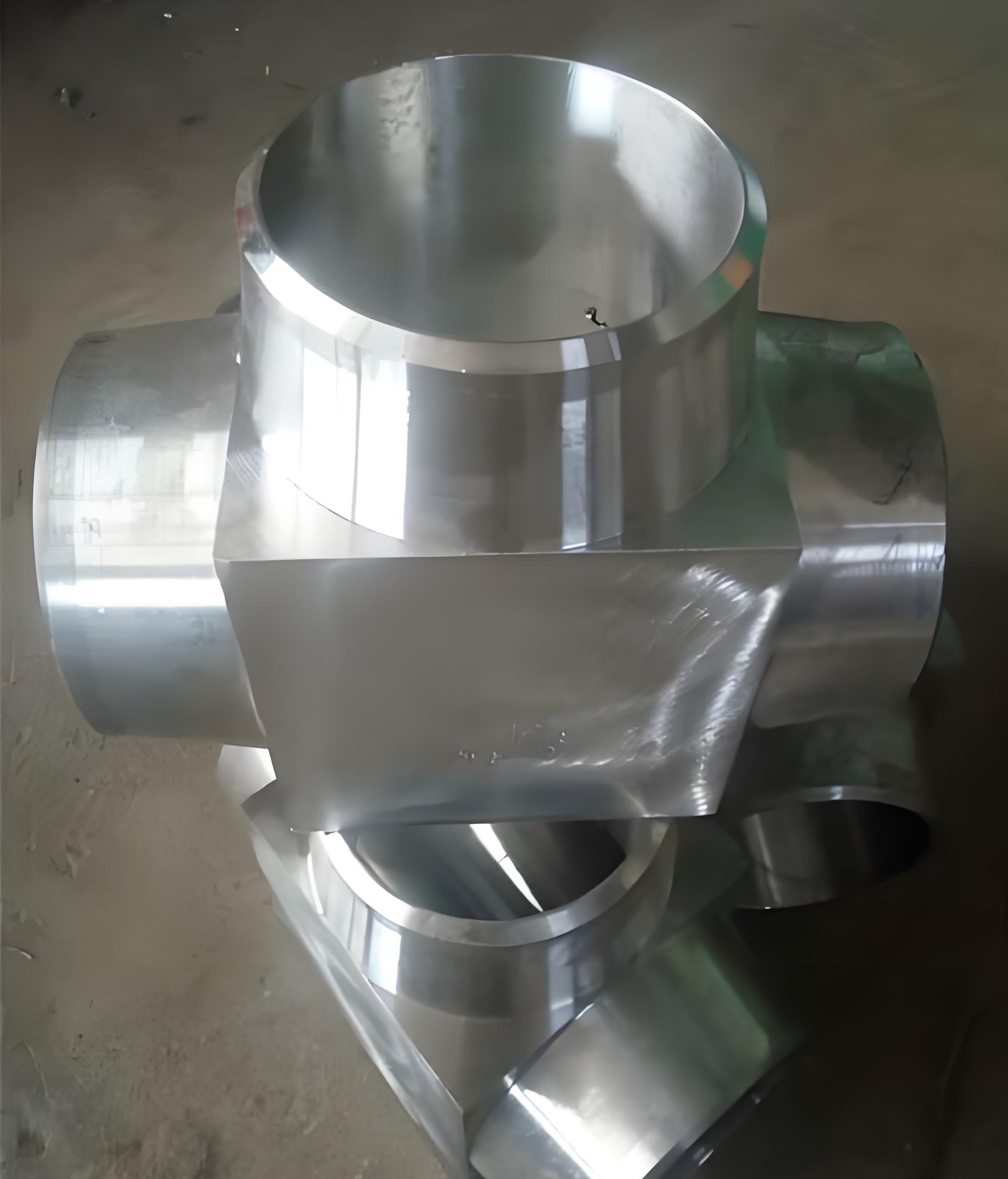
SW Socket Weld Cross
SW socket weld cross belongs to forged high-pressure small-diameter cross pipe fittings, formed by integral die forging and precision machining. The pipe opening is a grooved socket hole; after the steel pipe is inserted, it is connected by fillet welding along the pipe opening, without the need for complex groove machining. The product complies with ASME B16.11, GB/T14383, and SH/T3410 standards. Pressure ratings cover 3000LB, 6000LB, and 9000LB, suitable for SCH80, SCH160, and XXS wall thicknesses. Equal-diameter and reducing structures are optional. The one-piece forging has no spliced welds, a dense structure, pressure resistance, and quick assembly, making it particularly suitable for industrial installations with narrow spaces and dense pipelines. Before leaving the factory, it undergoes penetrant and magnetic particle non-destructive testing to ensure sealing reliability under high-pressure working conditions. It is widely used in instrument sampling, steam tracing, and high-pressure process branch systems in fields such as petroleum refining, thermal power generation, and coal chemical industry.
Learn More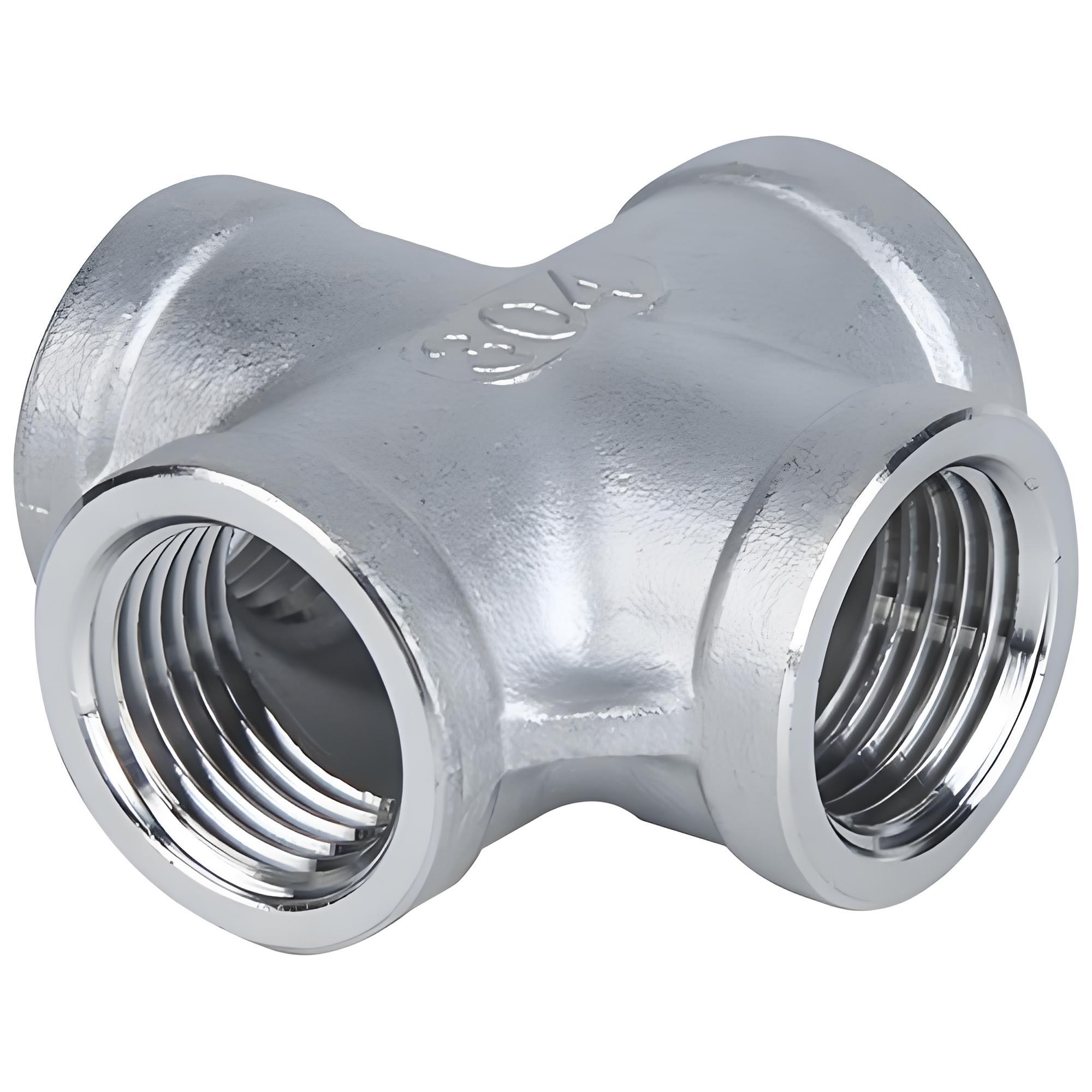
Threaded Cross
A threaded cross, also known as a threaded four-way, is a forged internally threaded connection-type cross pipe fitting. All four ports are machined with standard pipe threads, and pipeline assembly is achieved by threaded screwing, requiring no welding and offering convenient disassembly and assembly. The product is suitable for small-diameter branch pipe networks of DN6-DN100 (1/8"-4"), complies with ASME B16.11, GB/T14383, and BS3799 standards, has pressure ratings covering 2000LB, 3000LB, and 6000LB, and thread types including NPT, BSPT, BSPP, RC, etc., and is divided into two major categories: equal-diameter and reducing. It is integrally die-forged and formed, with a dense material structure, suitable for scenarios such as instrument piping, hydraulic and pneumatic systems, low-pressure to medium-high-pressure process branch lines, HVAC water supply and drainage, and small gas pipes. The threaded connection facilitates maintenance, disassembly, and assembly, but it is not suitable for high-temperature and high-pressure main pipelines with severe alternating vibration. PT penetrant testing and MT magnetic particle inspection can be performed before delivery, and it is widely used in petrochemical, power plant, water treatment, and general industrial fluid systems. We provide a variety of material and surface treatment options, support non-standard customization, and meet the needs of different working conditions.
Learn More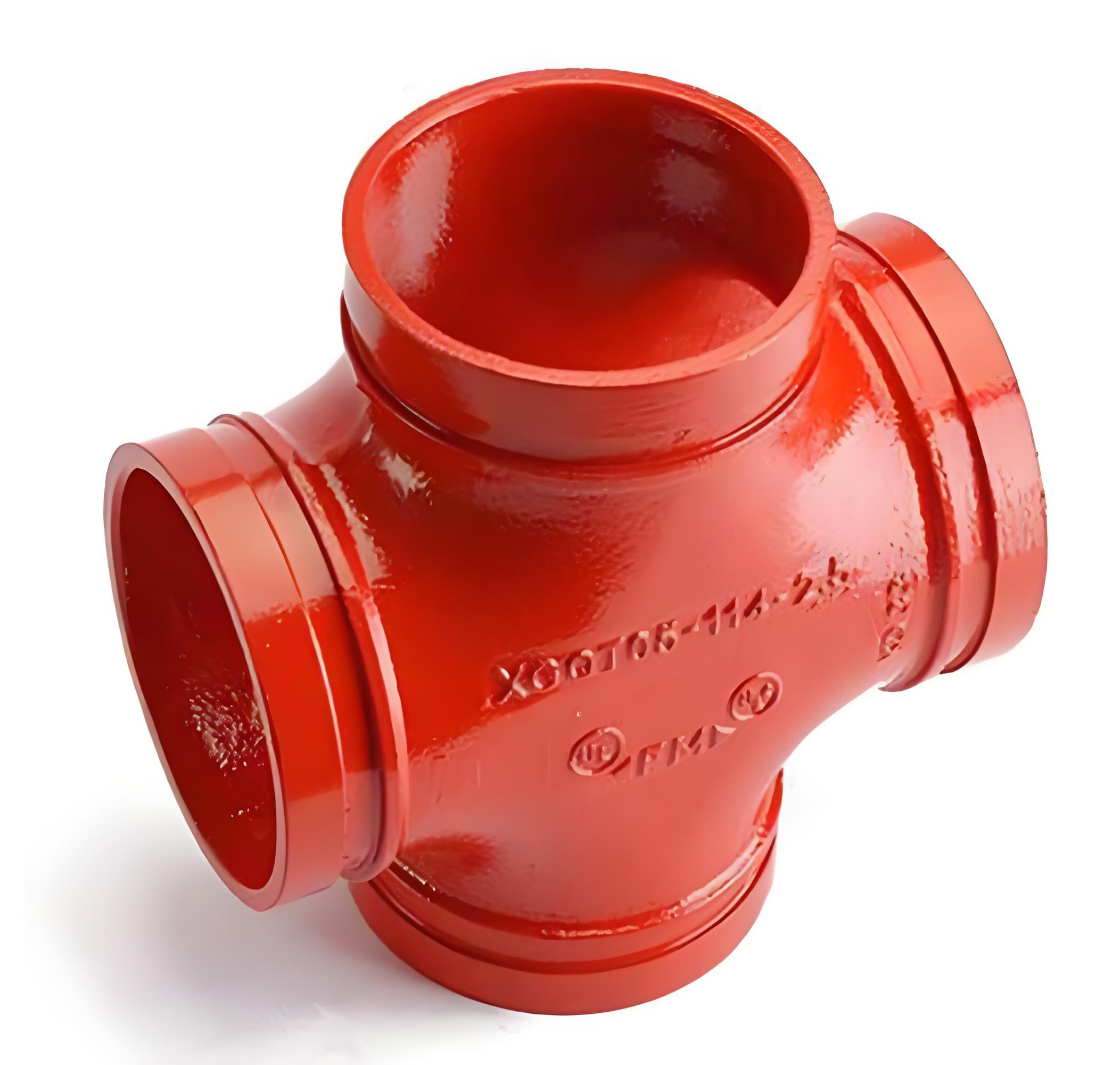
Grooved (clamp) cross
Grooved (clamp) cross, also known as clamp cross, is a key pipe fitting in prefabricated piping systems. The product ports are prefabricated with standard annular grooves, which, together with dedicated clamps and rubber sealing rings, achieve rapid locking without the need for welding or thread machining, simplifying the construction of pipeline diversion nodes. It mainly complies with standards such as GB/T36019-2018 and GB5135.11, with a nominal diameter range of DN25-DN300 and a conventional working pressure of 1.6MPa. The main body material is ductile iron QT450-10, and 304/316L stainless steel can also be customized. The product is divided into integral type and open-hole mechanical cross, suitable for four-way medium diversion or confluence, allowing slight pipeline displacement and effectively reducing vibration and noise. It is widely used in low and medium pressure fluid pipeline networks such as fire protection, HVAC, water supply and drainage, and municipal water supply, and is a mainstream choice for building electromechanical and overseas engineering projects.
Learn More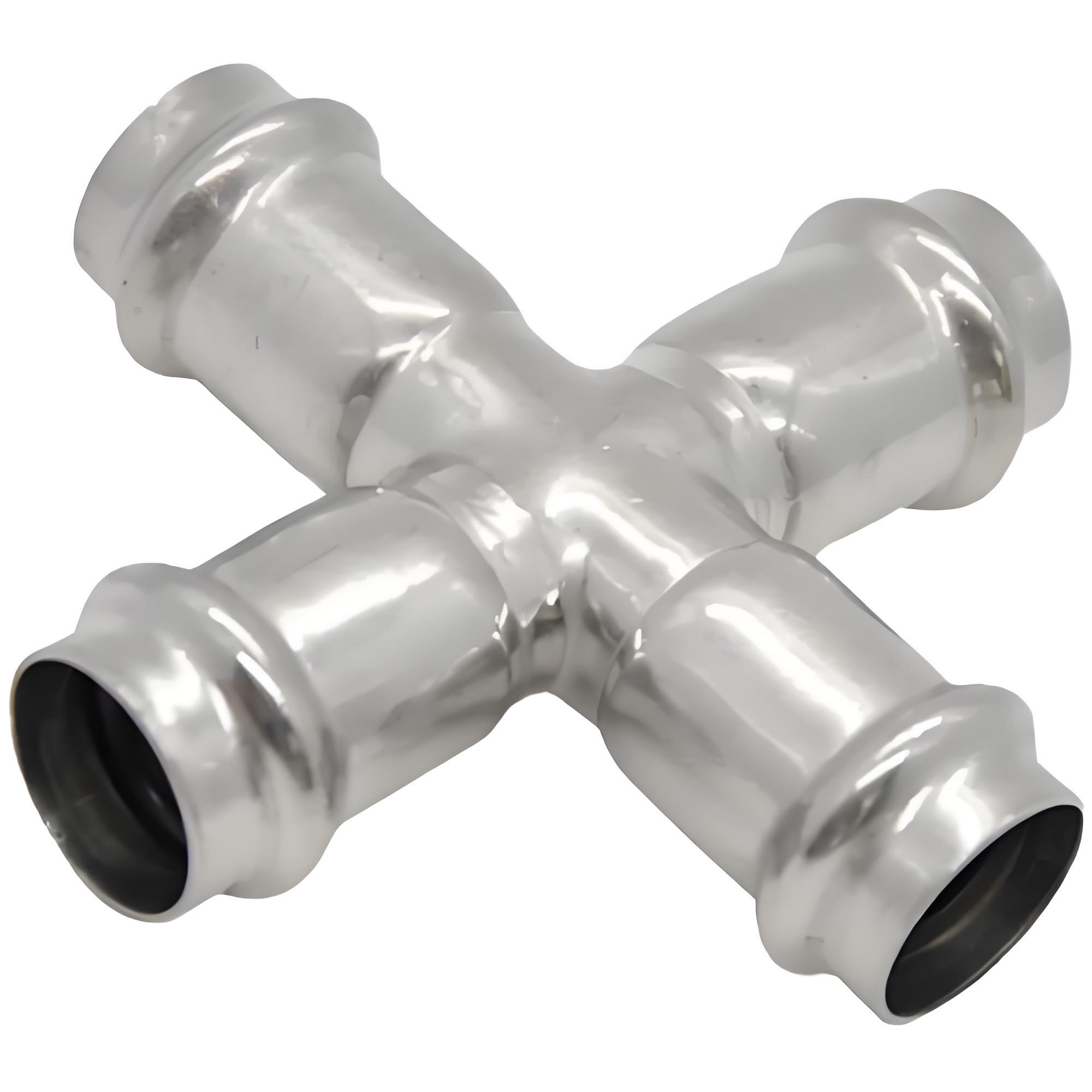
Press-fit four-way connector
The press-fit four-way connector is a thin-wall stainless steel mechanical radial compression four-way pipe fitting. It relies on a dedicated hydraulic press-fitting tool to radially squeeze and deform the fitting socket, locking the pipe and compressing the built-in O-ring seal to achieve a sealed connection, and the overall structure is a non-detachable permanent joint. It mainly complies with national standards GB/T19228 and CJ/T152, and the European standard EN10312. The nominal diameter is DN15-DN100, and the nominal pressure is PN16-PN25. It is divided into two mainstream systems: double press-fit (V-type) and single press-fit (M-type). It is compatible with two sets of national standard outer diameter systems, Series I and Series II, and can also adapt to German standard and European standard thin-wall stainless steel pipes. The mainstream materials are 304 and 316L austenitic stainless steel, which are hygienic and corrosion-resistant, and the inner wall of the pipeline is smooth and not prone to scaling. This pipe fitting requires no welding, no threading, and no open-flame operations. It offers fast construction speed, good pull-out resistance, tensile resistance, and seismic performance. It is mostly used in direct drinking water, municipal water supply, HVAC hot water, pharmaceutical, food, and small gas pipeline systems. It is a mainstream four-way diversion fitting for clean fluid pipeline networks in civil and light industrial applications, and is not suitable for high-temperature and high-pressure chemical main process pipelines.
Learn More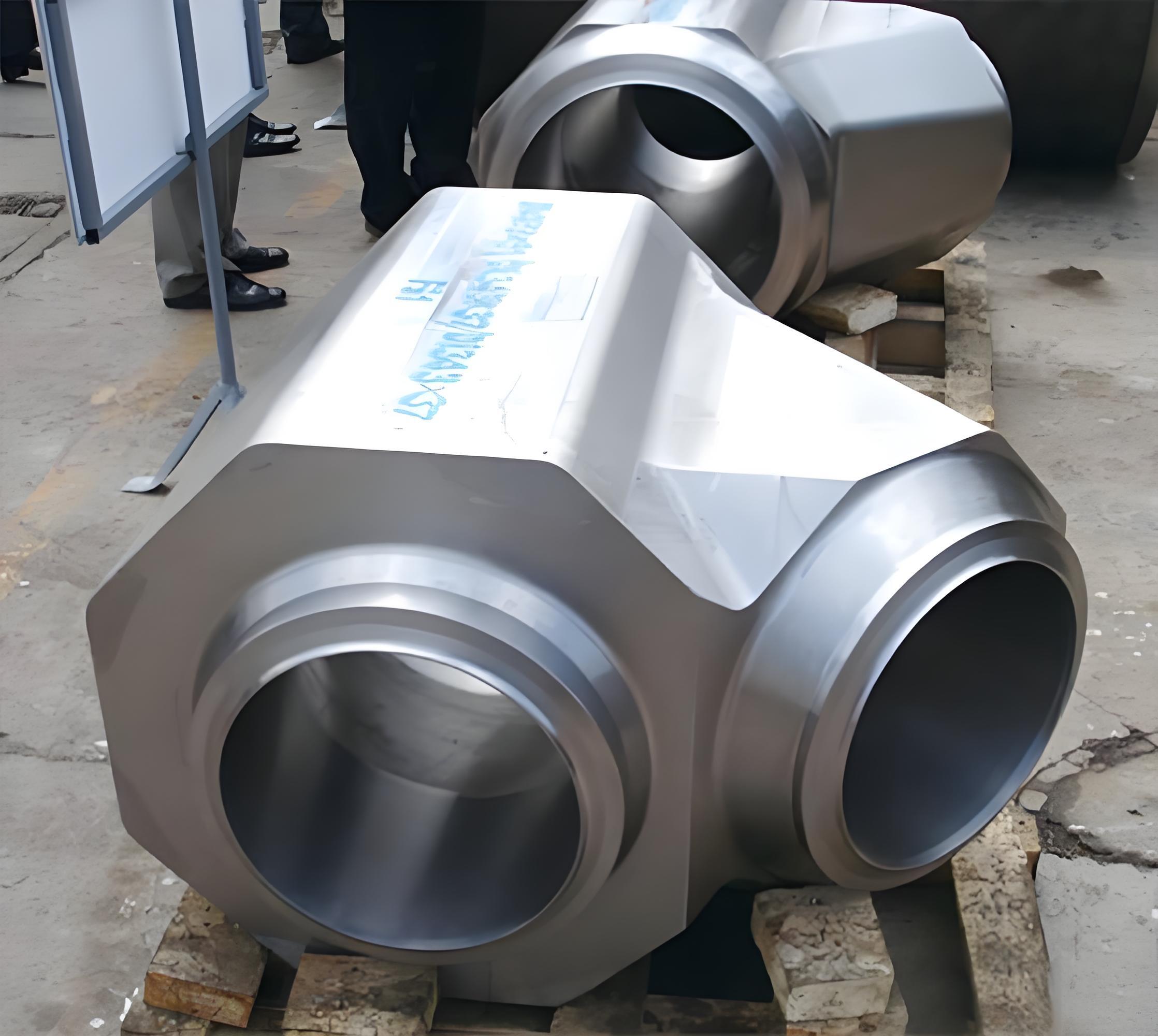
Product Details
Explore the key selling points, use cases, and detailed information of this product.
Learn More