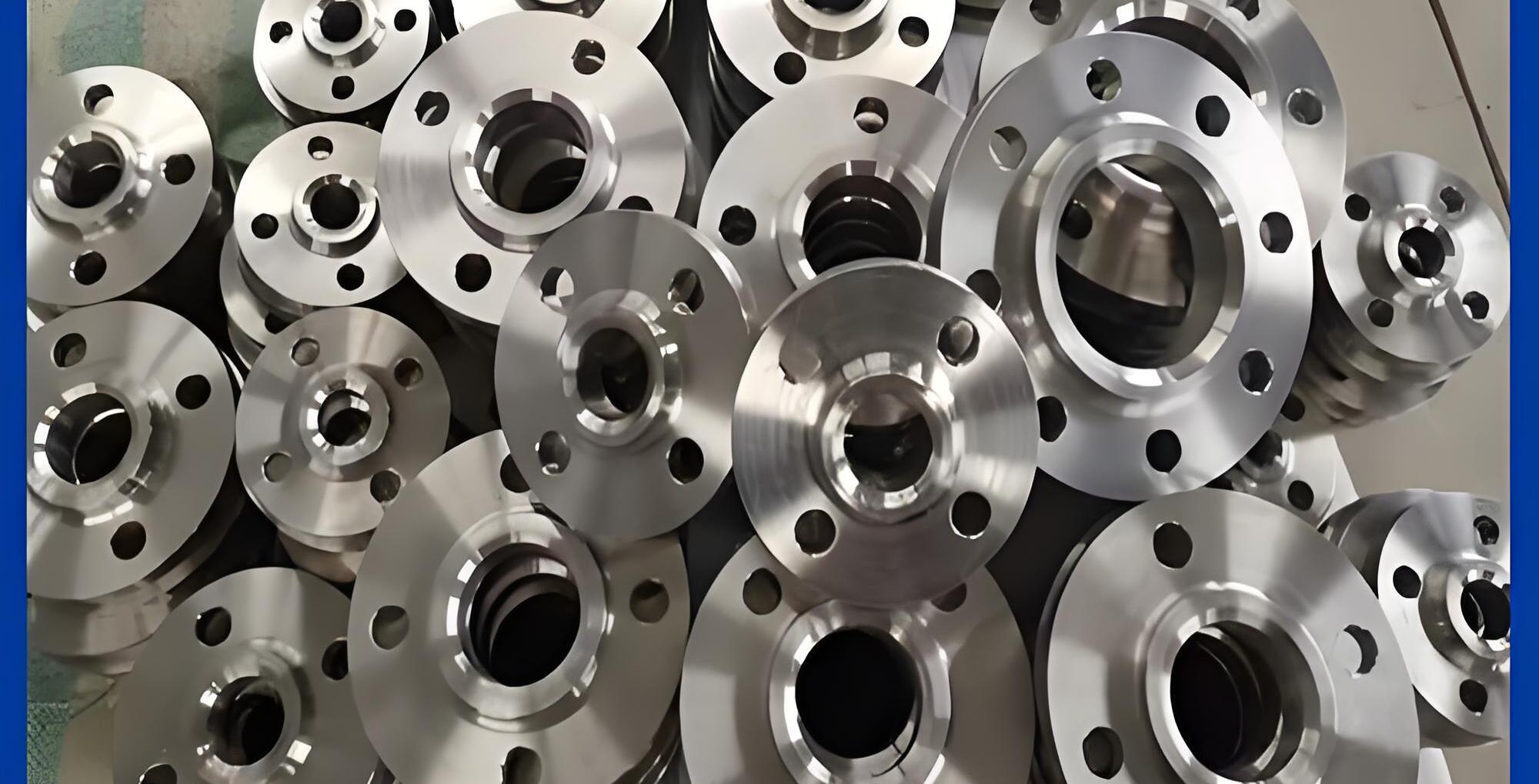
Reducing flange
Reducing flanges are mainly used for reducing transition connections between pipelines and equipment interfaces of different pipe diameters, replacing the traditional combined installation method of "standard flange + reducer," simplifying pipeline structure and reducing the number of welds. The product has a large diameter at one end and a small diameter at the other, and can directly achieve pipeline diameter reduction and expansion docking, adapting to scenarios such as pump and valve inlet and outlet ports, equipment nozzles, branch pipelines, and process pipeline diameter reduction modifications. It can effectively reduce fluid resistance, avoid material accumulation and liquid accumulation in pipeline dead corners, and improve pipeline transportation stability. It can be used for permanent pipeline finalized installation, and can also be used for engineering modifications, equipment adaptation, and diameter reduction connection in old pipeline renovation. It effectively reduces leakage points, lowers construction costs, and shortens installation periods, and is an indispensable core transition pipe fitting for non-standard diameter reduction systems in industrial pipelines.
Inquiry
- The biggest advantage of reducing flanges is integrated reducing forming, one-stop transition, and reduction of pipe fittings and welds.
- Compared with traditional reducing solutions, the structure is more compact, the leakage risk is lower, and installation efficiency is higher. Formed by integral forging process,
- the density is uniform, there are no sand holes or air pores, the strength is stable, and the pressure-bearing performance is excellent.
- It eliminates the problems of deformation and leakage in welded reducing structures. The reducing transition is smooth and fluent,
- Low fluid resistance
Detailed Introduction
A reducing flange is a transitional flanged pipe fitting with a standard flange outer diameter at one end and a different connecting pipe diameter at the other end. It is used to achieve flanged connection between pipes or equipment interfaces of two different nominal diameters, eliminating the step of installing a combination of an ordinary flange and a reducer. Compared with traditional solutions, the reducing flange has a more compact structure, reduces one weld seam, saves installation space, and lowers the risk of leakage. The products comply with standards such as ASME B16.5, GB/T9114, HG/T20592, HG/T20615, etc. Specifications cover DN15-DN600, with pressure ratings Class150-2500LB and PN6-PN160. We provide various materials including carbon steel and stainless steel, and support concentric/eccentric types, various sealing faces, and non-standard customization. Reducing flanges are widely used in diameter-changing connections of pipelines in chemical, oil and gas, power plants, water treatment, etc., as well as transitions for pump and valve inlets/outlets and non-standard equipment interfaces. Because the processing difficulty is higher than that of standard flanges, stock is relatively low, and most specifications require customization. You are welcome to provide dimensions and quantities, and we will assist with quotation.
- Integrated reducing forming, replacing the combination of flange + reducer, reducing weld seams and leakage points
- Integral forging process, uniform density, stable strength, reliable pressure-bearing performance
- Smooth reducing transition, low fluid resistance, not prone to slag accumulation or blockage
- Rich specification combinations, supporting mutual conversion between any large and small diameters, with full coverage of high and low pressures
- Supports customization to multiple standards (ASME, GB, HG) and multiple materials (carbon steel, stainless steel)
- Flexible minimum order quantity, MOQ for conventional specifications as low as 1 piece, supporting mixed batches
| Product Name | Reducing Flange |
| Product Categories | Please contact us to confirm |
| Standard | ASME B16.5, GB/T9114, HG/T20592, HG/T20615, EN1092-1; diameter range: DN15-DN600, supporting any reducing ratio; pressure rating: Class150-2500LB, PN16-PN160; structural form: concentric reducing, eccentric reducing; type: WN, SO, PL, TH, SW, BL reducing flanges; sealing face: RF, FF, MFM, TG, RJ; process: integral forging, heat treatment, precision turning, non-destructive testing; working temperature: carbon steel -20℃~425℃, stainless steel -196℃~600℃; suitable media: water, steam, oil and gas, chemical fluids, corrosive |
| Customization | Our factory possesses full-dimensional non-standard customization capabilities for reducing flanges, capable of customizing any size of diameter reduction ratio, concentric/eccentric special structures, and extra-large diameter non-standard reducing flanges. We support customizing ultra-high-pressure thickened, special sealing surface precision-machined, irregular bolt hole spacing, and eccentric offset customized products. We can perform surface treatment processes such as sandblasting and rust removal, blackening, hot-dip galvanizing, epoxy anti-corrosion, and acid-alkali resistant coatings. We can reverse-customize exclusive reducing flanges according to customer equipment drawings, on-site pipeline parameters, and old equipment dimensions. We support laser marking, LOGO engraving, batch coding, and exclusive OEM packaging. We can produce high-precision materials such as low-temperature steel, duplex steel, and nickel-based alloys, adapting to the supporting needs of overseas high-end chemical, power, and special equipment non-standard working conditions. |
| MOQ | Our factory's reducing flanges adopt a flexible and relaxed foreign trade minimum order model. The MOQ for conventional popular reducing specifications is as low as 1 piece, meeting the needs of sample testing, equipment repair, engineering spare parts, and small trial orders. Common carbon steel and stainless steel conventional reducing combinations on the market support scattered purchases, mixed batches of multiple specifications, and combined shipments, with no mandatory minimum order threshold. Large-volume full-container procurement has no upper limit, supporting long-term stockpiling, |
| Lead Time | Conventional national standard and American standard popular reducing flange specifications are kept in regular stock. Commonly used ratio specifications can be shipped extremely fast within 24 hours, quickly responding to customers' urgent orders, replenishment orders, and rush repair and modification needs. Standard batch conventional reducing orders have a production lead time of 3-7 working days, with stable and efficient shipment. Ordinary non-standard reducing ratio, hole modification, and sealing surface modification orders have a lead time of 7-10 working days. Extra-large diameter, ultra-high |
| Packaging | Our factory's reducing flanges adopt standardized multi-layer protective packaging for foreign trade export, with full-process rust prevention, collision prevention, and sealing surface damage prevention. High-precision sealing surfaces are affixed with thickened dust-proof and scratch-proof protective film to avoid transportation wear, oxidation and rusting, and precision damage. Each piece is individually wrapped and isolated with bubble film to prevent friction scratches and corner collision deformation. Conventional specifications are classified and packed into thickened export cartons. Large-volume full orders are packed using fumigated solid wood pallets, reinforced overall with steel straps, with a stable structure, suitable for long-distance ocean shipping. The outer packaging clearly marks product model, reducing specifications, standard, material, pressure rating, quantity, batch, and export shipping marks. We support neutral packaging, customer LOGO OEM, exclusive shipping marks, and customized packaging boxes, fully complying with export commodity inspection, customs clearance, and overseas warehousing regulatory standards. |
| Reference Price | Inquiry |
Applications
- Reducing connections between pipes of different diameters in petrochemical process pipelines
- Reducing transition for equipment interfaces such as pump inlet and outlet, valve branch pipes
- Reducing modification of engineering pipelines such as power plants, gas, and water treatment
- Transition connection for non-standard equipment interfaces, replacing customized reducing pipes
- Batch procurement and non-standard customization needs of foreign trade purchasers and engineering contractors
Overview
A reducing flange is a transition flange used to connect pipes or equipment interfaces of different nominal diameters. One end has the standard flange outer diameter, while the other end has a different pipe connection diameter, allowing direct reducing connection and eliminating the combined installation of ordinary flanges and reducers. The product complies with standards such as ASME B16.5, GB/T9114, HG/T20592, HG/T20615, etc. Specifications cover DN15-DN600, with pressure ratings Class150-2500LB, PN6-PN160. Compared with traditional solutions, the structure is more compact, reducing welds and lowering the risk of leakage. Due to the high processing difficulty, stock is limited, and most specifications require customization. Welcome to contact us to confirm specific requirements.
Key Features
Integrated reducing forming reduces pipe fittings and welds, making installation simpler; integral forging process ensures uniform density, stable strength, and reliable pressure-bearing performance; smooth reducing transition provides low fluid resistance and is not prone to slag accumulation or blockage; rich specification combinations support mutual conversion between any large and small diameters, with full coverage of high and low pressure; supports customization to multiple standards and multiple materials to meet different working condition requirements.
Applications
Reducing flanges are widely used in process pipeline reducing connections in industries such as petrochemical, natural gas, power, and water treatment, pump and valve inlet/outlet connections, transitions for non-standard equipment interfaces, and connection in new and old pipeline renovations. Concentric reducers are suitable for vertical pipelines, while eccentric reducers are suitable for horizontal pipelines to prevent gas and liquid accumulation. They are suitable for installation in narrow spaces and pipeline simplification and optimization, and can also be used under high and low temperature and high and low pressure working conditions.
Specifications
Executive standards include ASME B16.5, GB/T9114, HG/T20592, HG/T20615, EN1092-1; diameter range DN15-DN600, supporting any reducing ratio; pressure ratings Class150-2500LB, PN16-PN160; structural forms include concentric and eccentric; styles include WN, SO, PL, TH, SW, BL; sealing faces include RF, FF, MFM, TG, RJ; processes include integral forging, heat treatment, precision turning, and non-destructive testing; working temperature for carbon steel -20℃~425℃, for stainless steel -196℃~600℃; compatible media include water, steam, oil and gas, chemical fluids, etc. Specific materials and dimensions can be customized according to project requirements. Please contact us to confirm.
Purchase & Delivery
MOQ for regular popular specifications is as low as 1 piece, supporting sample testing and small trial orders; commonly used carbon steel and stainless steel specifications support mixed batches. Regular national standard and American standard popular specifications are kept in stock, and commonly used ratios ship within 24 hours; standard batch order delivery time is 3-7 working days; non-standard customized order delivery time is 7-10 working days. Packaging uses foreign trade standard multi-layer protection, supporting neutral packaging and OEM branding. For large-volume procurement, please contact our sales team to obtain detailed quotations and delivery times.
Service & Support
We provide full-dimensional non-standard customization services, including any reducing ratio, special structures, extra-large diameters, special materials, etc. All products undergo strict inspection before leaving the factory to ensure quality. We provide free selection guidance, technical Q&A, and installation solutions. Products enjoy long-term warranty under normal working conditions, and non-human damage can be returned or exchanged. If you have any questions, welcome to contact us, and we will provide one-stop after-sales service.
FAQ
What is the difference between a reducing flange and a reducer?
A reducing flange has its own flange port and can be directly bolted, eliminating one pipe fitting and weld, making installation simpler and the structure more compact.
How to choose between concentric reducers and eccentric reducers?
Vertical pipes usually use concentric reducers, while horizontal pipes use eccentric reducers, to prevent gas accumulation and liquid accumulation. The specific choice can be determined according to the pipeline layout and the medium flow direction.
Do you support arbitrary reduction ratios?
Yes. We can customize non-standard reduction ratios for various large and small diameters, including special non-standard sizes. You are welcome to provide drawings or parameters.
Can it be used in high-pressure working conditions?
Yes. We use an integral forging process and can produce Class2500LB ultra-high-pressure reducer flanges to meet the needs of high-pressure working conditions.
Can I place mixed batch orders?
Yes. We support mixed batches of multiple specifications and multiple materials, and can accept both small orders and large orders, flexibly meeting procurement needs.
Submit Inquiry
Please fill in the following information, and we will contact you as soon as possible to provide product solutions or quotes based on your needs.